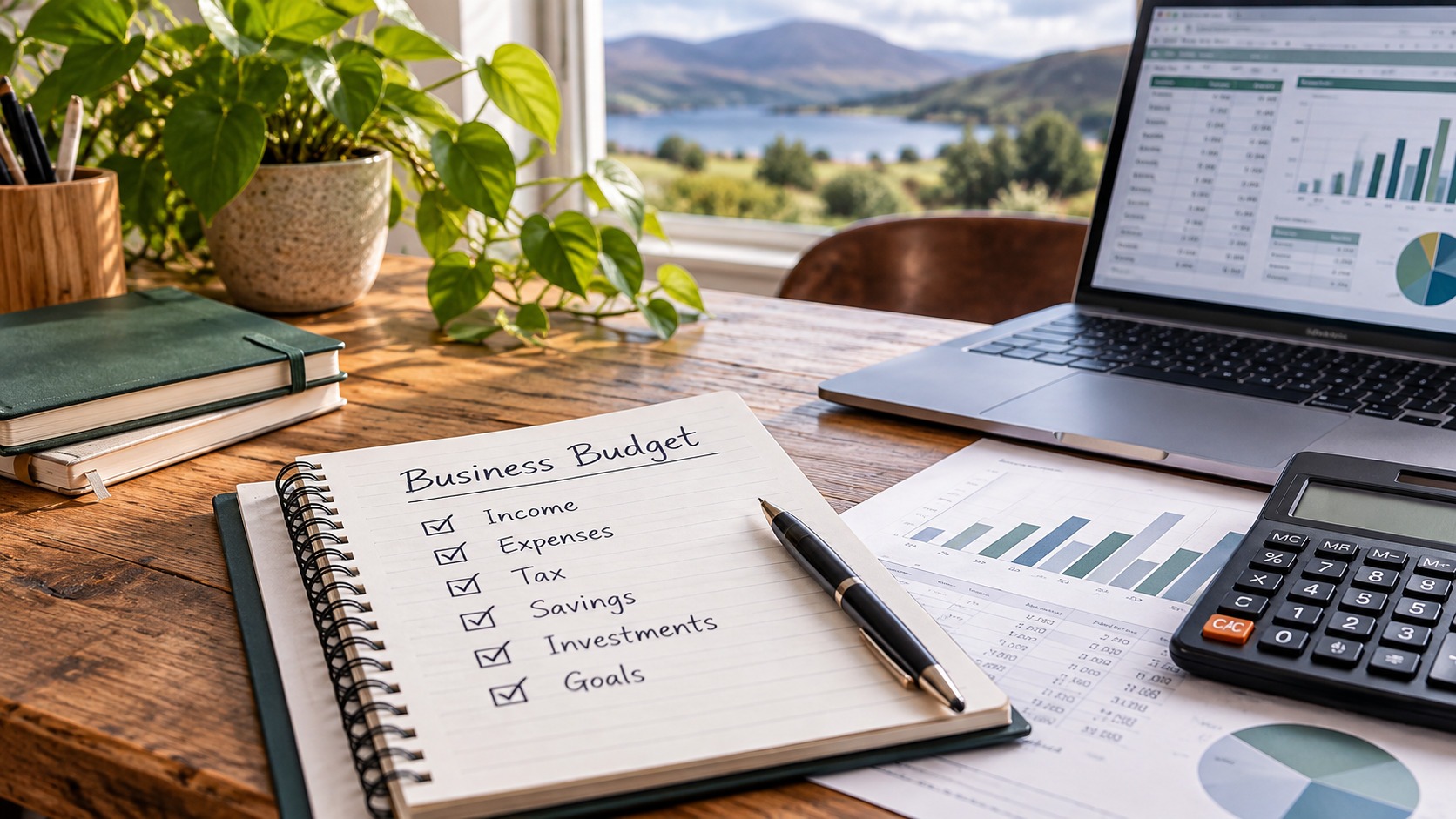
Small business budgeting can make running your business much easier. When you understand what money is coming in, what needs to go out and what’s coming up, you’re in a much better position to plan ahead.
Can you afford to take on another member of staff? Is there enough set aside for the tax bill? What happens if sales are quieter next month? Can the business afford that new piece of equipment? A budget helps you answer those questions with figures rather than guesswork.
Small business budgeting is simply the process of estimating your income and expenditure over a set period, then regularly comparing those figures with what actually happens. It doesn’t need complicated spreadsheets or financial jargon. A useful budget is one that shows you where the business stands and what’s likely to happen next.
What Is a Small Business Budget?
A budget is a financial plan showing how much money you expect the business to earn and spend over a particular period. Most businesses prepare an annual budget and then break it down by month.
Your expected income might come from:
- sales
- services
- contracts
- retainers
- grants or other funding
- other business income
Against that, you estimate your expected costs. The aim isn’t to predict every penny. It’s to give you a realistic picture of the months ahead.
Why Is Budgeting Important for a Small Business?
It’s easy to look at the bank balance and assume things are going well. But the amount sitting in the bank today doesn’t tell you what the business can afford. Some of that money may already be needed for VAT, tax, wages, suppliers, subscriptions or bills that haven’t arrived yet.
Say there’s £12,000 in the business account. That feels comfortable, until you look at what’s already committed: a £2,800 VAT payment due next month, £4,500 of wages and supplier invoices, and a £1,200 insurance renewal. Once those are paid, the money you actually have to work with is closer to £3,500.
A budget helps you look ahead. It shows whether your expected income will cover your costs, helps you plan for larger expenses and lets you spot problems before they become urgent. Instead of asking “Can we afford this?” and hoping for the best, you have something concrete to work from.
What Should You Include in a Small Business Budget?
Start with the income you realistically expect the business to receive. Then look at your costs, which will usually be a mix of fixed and variable.
Fixed costs stay broadly similar however busy you are, such as:
- rent
- insurance
- software subscriptions
- accountancy or bookkeeping fees
- phone and internet
- regular staff costs
Variable costs change with your level of activity, such as:
- materials and stock
- postage
- travel
- freelance or subcontractor costs
- payment processing fees
Then think about the costs that don’t come round every month. Annual insurance renewals, equipment replacement, professional memberships, vehicle costs and tax bills are easy to overlook when you’re focused on this month’s figures. Building them into the budget means they don’t come as a shock when they arrive.
How Do You Create a Small Business Budget?
Begin with what you already know. Look at previous accounts, bank statements or bookkeeping records to see what the business has earned and spent in the past. That gives you a sensible starting point.
Next, think about what’s likely to change. Are your prices going up? Have you gained or lost a regular customer? Are wages, rent or supplier costs rising? Is there a large purchase planned?
Once you’ve estimated your income and expenditure, break the figures down month by month. That’s far more useful than a single annual total, particularly if your income or costs vary through the year.
When I went fully self-employed, one of the first things I did was build a monthly budget for my own business. Not because I enjoy spreadsheets (although I do), but because I needed to know how many months of work it would take to cover my costs, and what I could realistically say yes to while income was still building.
Budget Versus Actual: The Bit That Really Matters
Creating the budget is only the start. It becomes useful when you regularly compare it with what actually happened.
| Budget | Actual | Difference | |
| Income | £5,000 | £4,000 | -£1,000 |
| Materials | £500 | £750 | +£250 |
If you expected £5,000 of income in a month but received £4,000, you need to understand why. Was a customer late paying, or was it a genuinely quieter month? If materials budgeted at £500 came in at £750, is that a one-off or a price rise that needs to go into future months?
The point isn’t to make the actual figures match the budget perfectly. It’s to understand the differences and act on them.
What’s the Difference Between a Budget and Cash Flow?
They’re related, but they aren’t the same thing. A budget looks at the income and expenditure you expect the business to generate. A cash flow forecast looks at when money actually enters and leaves your bank account.
That distinction matters. You might invoice a customer for £5,000 in October, but if they don’t pay until December, that money isn’t available to pay October’s bills. A business can look profitable on paper and still run short of cash.
Using a budget and a cash flow forecast together gives you a much clearer picture of where the business really stands.
How Often Should You Review Your Business Budget?
A budget shouldn’t be prepared once a year and then forgotten. For most businesses, a monthly review is a sensible starting point. Look at:
- actual income compared with budget
- actual costs compared with budget
- any unexpected spending
- changes to expected future income
- larger costs coming up
- areas where spending is consistently higher or lower than expected
If something significant changes, update the forecast rather than carrying on with figures you already know are unrealistic. A budget should help you run the business you have now, not the one you thought you’d have six months ago.
Budgeting for Seasonal and Rural Businesses
Budgeting matters even more when income isn’t spread evenly through the year. Many businesses in the Scottish Highlands are seasonal. Tourism, accommodation, hospitality and trades can have very busy periods followed by much quieter months, while many costs carry on regardless.
We run a holiday cottage in Sutherland, so I know the pattern well: bookings stack up over the summer, then things go quiet, but the insurance, maintenance, licence and running costs don’t stop. The summer income has to do a lot of the work for the rest of the year.
A monthly budget lets you see those peaks and troughs and plan for them. A strong summer isn’t necessarily an invitation to spend more. Some of that income may need to carry the business through the winter.
Common Small Business Budgeting Mistakes
The most common mistake is being optimistic about income while underestimating costs. Others include forgetting annual or irregular expenses, not allowing for price increases, and creating a budget that’s never looked at again.
It’s also important not to confuse turnover with money available to spend. Tax, VAT, wages and other commitments can take up a large share of what comes in. A realistic budget reflects the whole picture, not just what you hope to sell.
Getting Started
Start with realistic figures, include the costs that are easy to forget, and look at the numbers every month. A budget isn’t there to satisfy a bank, funder or accountant. It’s there to help you run the business.
If your books aren’t yet in a state where you can pull useful figures from them, that’s usually the place to start. My free Bookkeeping Template is a good first step.
At Cassley Office Solutions (COS), I help businesses and third sector organisations get their financial systems and reporting working properly, so the numbers are there when you need them. If you’d like a hand setting up a budget or getting your records in order, send me a message or call 07356 225006.